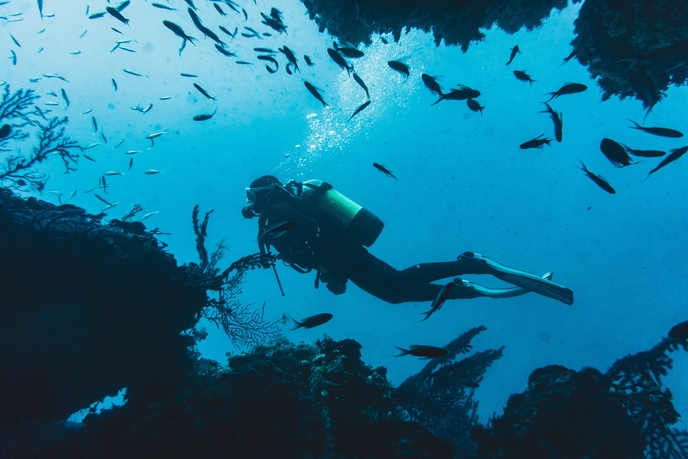
Yes, you may be able to sue a scuba diving company after an accident in Florida. Whether you have a good case depends on what caused the incident, whether the dive operator or another party failed to act reasonably, and whether that failure caused your injuries.
These cases are rarely straightforward. Scuba diving involves risks, and commercial dive companies usually require divers to sign liability waivers before boarding the vessel. Many Florida Keys excursions also take place aboard passenger vessels operating on navigable waters, which means federal maritime law may apply in addition to Florida law.
A signed waiver can create a serious legal challenge, but it does not necessarily answer every question about liability. The language of the agreement, the parties it protects, the conduct that caused the injury, and the law governing the claim must all be evaluated.
When May a Scuba Diving Company Be Liable?
A dive operator is not automatically responsible whenever a participant is injured. Scuba diving inherently involves risks to participants’ wellbeing, including pressure changes, currents, limited visibility, physical exertion, equipment dependency, marine life, and other dangers that cannot be completely eliminated.
The more important legal question is whether the operator created an unnecessary hazard, failed to take reasonable precautions, or responded improperly when a problem arose.
For example, a recently certified diver may knowingly accept the ordinary risks of entering open water. That does not necessarily mean the diver accepts being taken to a site with conditions far beyond their training, being provided with poorly maintained equipment, or being left in the water because the crew failed to perform an accurate head count.
A potential negligence claim may arise when a commercial dive company fails to properly maintain rental equipment, supplies contaminated breathing gas, conducts an inadequate safety briefing, ignores unsafe marine conditions, or takes divers to depths or sites that are unsuitable for their experience.
Liability may also arise when a captain or crew operates the vessel dangerously around divers, fails to use required divers-down warning devices, lacks appropriate emergency equipment, or delays responding to a missing or distressed participant.
No single fact automatically establishes negligence. The dive plan, weather, current, visibility, participant experience, equipment condition, crew conduct, emergency response, and sequence of events must be considered together.
The Difference Between an Inherent Risk and Negligence
The distinction between an inherent diving risk and operator negligence is often the central dispute in a scuba accident case.
An inherent risk is a danger that remains even when an excursion is planned and conducted responsibly. A diver may unexpectedly experience anxiety underwater, have difficulty equalizing pressure, become fatigued, or encounter a changing current. An injury caused solely by one of those recognized risks may not support a claim against the company.
Negligence involves a preventable failure to use reasonable care. Sending an inexperienced diver into known hazardous conditions, performing a disorganized rescue, failing to communicate the dive plan, or moving the vessel before every diver is accounted for may present very different legal issues.
Dive companies and their insurers frequently argue that an injured participant accepted the risk, failed to follow instructions, exceeded certification limits, concealed a medical condition, misused equipment, or caused the emergency through poor decisions.
Those defenses make evidence particularly important. Dive computer data, witness accounts, equipment condition, vessel records, safety briefings, weather information, and crew communications may help determine whether the accident resulted from an unavoidable risk or a preventable failure.
What Should You Consider When Choosing a Florida Keys Dive Company?
Scuba diving is a major part of the tourism economy throughout Key Largo, Islamorada, Marathon, the Lower Keys, and Key West. Visitors may have dozens of operators to choose from, but price, convenience, and online ratings should not be the only considerations.
Before booking, ask the company practical questions about its vessel, personnel, equipment, and emergency procedures:
- Does the captain hold the credentials required to carry paying passengers?
- Are the instructors and divemasters currently certified and familiar with the planned dive site?
- How often are regulators, buoyancy compensators, tanks, gauges, valves, and weight systems inspected and serviced?
- Does the vessel carry emergency oxygen, first-aid supplies, reliable marine communications, and appropriate flotation equipment?
- How does the crew track divers entering and exiting the water?
- What is the company’s procedure for a distressed diver, a missing diver, decompression illness, equipment failure, or medical emergency?
- How does the operator decide whether weather, current, visibility, and wave conditions are appropriate for the group?
- Will the company change the site, modify the dive plan, or cancel the trip when conditions are unsafe?
A reputable operator should be willing to answer these questions directly. Evasive responses, visibly disorganized equipment, rushed safety briefings, overcrowded vessels, or pressure to participate despite uncomfortable conditions may be warning signs.
The crew should also evaluate whether the planned dive is appropriate for each participant’s certification, experience, recent diving history, physical condition, and comfort level. A certification card alone does not establish that every diver is prepared for every site.
Common Scuba Diving Accidents and Injuries
Scuba accidents may result from events underwater, failures aboard the dive boat, equipment problems, medical complications, or an inadequate rescue response.
Decompression sickness
Decompression sickness can occur when dissolved gas forms bubbles in the body after a reduction in pressure. Symptoms may include joint pain, dizziness, weakness, numbness, confusion, breathing difficulty, impaired coordination, or loss of consciousness.
Symptoms do not always appear immediately. A diver may begin feeling ill after returning to the boat or shore, making prompt medical evaluation especially important.
Arterial gas embolism
An arterial gas embolism can occur when gas enters the arterial circulation. It may result in sudden neurological, respiratory, or cardiovascular symptoms and can become life-threatening.
Rapid ascent, pulmonary barotrauma, panic, breath-holding, and inadequate instruction may be relevant when investigating how the event occurred.
Drowning and near drowning
A diver may become overwhelmed by panic, exhaustion, strong current, poor visibility, inadequate buoyancy, equipment problems, separation from a buddy, or a medical emergency.
The outcome may depend heavily on how quickly the crew recognizes the distress, reaches the diver, administers oxygen, contacts emergency responders, and begins evacuation.
Barotrauma
Changes in pressure can injure the ears, sinuses, lungs, teeth, and other air-containing spaces in the body. These injuries may occur during descent or ascent and may be associated with rapid pressure changes, panic, equipment complications, or insufficient instruction.
Equipment failures
Regulator malfunctions, leaking tank valves, buoyancy compensator failures, inaccurate gauges, defective dive computers, or problems with weight-release systems can place a diver in immediate danger.
An equipment malfunction does not automatically prove negligence. The investigation may need to determine who supplied the equipment, when it was last inspected, whether prior problems were reported, how it was maintained, and whether the diver used it as instructed.
Divers may be injured when a vessel approaches people in the water improperly, moves before everyone is accounted for, or fails to maintain an appropriate distance from divers-down warning devices.
Other injuries occur aboard the vessel. Wet decks, unsecured tanks, unsafe ladders, inadequate handholds, rough operation, and poorly managed entry or exit procedures can lead to falls, fractures, head injuries, back injuries, and lacerations.
Diver separation or abandonment
A diver can become separated from the group because of current, low visibility, ineffective supervision, inadequate planning, or confusion about the return point.
A separation becomes particularly dangerous when the crew does not promptly recognize that someone is missing. Accurate rosters, head counts, buddy assignments, entry and exit records, and clear communication procedures can be critical.
What If You Signed a Scuba Diving Liability Waiver?
Nearly every commercial dive operator requires participants to sign a release, waiver, assumption-of-risk agreement, or indemnity agreement. Florida courts generally enforce clearly written recreational releases, and a waiver may apply even when it does not use the exact word “negligence.”
However, the existence of a waiver does not necessarily resolve the entire case. The agreement must be reviewed to determine what risks it describes, which businesses and individuals it protects, what claims it attempts to release, and whether the conduct that caused the accident falls within its scope.
The company identified on the waiver may not be the same entity that owned the vessel, employed the captain, rented the equipment, supplied the breathing gas, or provided the instructor. A document protecting one business may not necessarily release every potentially responsible party.
A waiver may also contain provisions addressing where a lawsuit must be filed, which law applies, how quickly notice must be provided, or whether the participant agreed to indemnify another party. Those provisions can be just as important as the release language itself.
Federal maritime law may further affect certain attempts by vessel owners or operators to avoid liability for passenger injuries caused by negligence. Whether those maritime rules apply to a particular dive charter depends on the vessel, voyage, contractual relationships, and facts surrounding the accident.
For these reasons, an injured diver should not assume that the waiver completely eliminates the right to pursue a claim. The document must be analyzed carefully by an attorney familiar with both Florida liability law and federal maritime law.
Who May Be Responsible for a Scuba Diving Accident?
The name displayed on the dive shop, website, or booking confirmation may not identify every business involved in the excursion.
One company may market the trip while another owns the vessel. The captain may work for the vessel owner, while an instructor or divemaster works as an independent contractor. Rental equipment may be supplied or serviced by a separate business, and the breathing gas may come from another provider.
Depending on the cause of the accident, potentially responsible parties may include the dive company, charter operator, vessel owner, captain, instructor, divemaster, equipment rental provider, maintenance contractor, gas supplier, manufacturer, distributor, booking company, or operator of another vessel.
Identifying the correct parties requires examining corporate records, vessel documents, employment relationships, contracts, maintenance records, and insurance policies. This is one reason scuba accident litigation can become significantly more complicated than a typical premises liability or automobile claim.
Does Maritime Law Apply to a Florida Keys Scuba Accident?
Short answer: It may.
Federal maritime law generally applies to certain incidents involving vessels and maritime activity on navigable waters. Commercial dive excursions in the Florida Keys commonly use passenger vessels traveling through coastal and offshore waters, satisfying the navigable waters requirement.
The application of maritime law can affect the duty owed to a diver, the enforceability of contractual provisions, the parties that may be sued, the division of fault, the damages that may be recovered, the proper court, and the deadline for bringing a claim.
Some cases involve a combination of maritime law and Florida law. Different legal rules may govern different issues within the same lawsuit.
A vessel owner may also attempt to initiate a federal limitation proceeding seeking to restrict its financial liability, often called a Limitation of Liability action. Such proceedings can create special filing requirements and shortened deadlines for injured people and their families.
Determining the governing law requires more than simply identifying where the diver entered the water. The vessel’s role, the location of the incident, the activity involved, and the relationships among the parties must all be examined.
Why Scuba Diving Accident Claims Can Be Difficult
Liability waivers are only one challenge.
The cause of the injury may be medically disputed. Conditions such as decompression sickness, arterial gas embolism, pulmonary injury, drowning, and cardiac events often require analysis by medical specialists. The operator may argue that the diver’s health, ascent profile, air consumption, or actions caused the event rather than anything the company did.
Evidence may also disappear quickly. Rental equipment can be returned to service, repaired, altered, or discarded. Electronic data may be overwritten. Vessel logs may be incomplete. Tourists who witnessed the accident may leave Florida within days.
Marine conditions present another complication. Current, visibility, wave height, wind, and weather can change rapidly, making it difficult to recreate the circumstances without prompt investigation.
The business structure may be unclear as well. The company that accepted payment may not own the vessel or employ the personnel involved. Determining who controlled the relevant part of the operation can require extensive investigation.
What Evidence Should Be Preserved?
After obtaining necessary medical treatment, an injured diver or family member should try to preserve as much information as possible.
Important evidence may include:
- The signed waiver, booking confirmation, receipt, and advertisements
- The names of the dive company, vessel, captain, instructors, divemasters, and crew
- Photographs or videos of the equipment, vessel, site, and conditions
- Dive computer, smartwatch, and underwater camera data
- Certification records, dive logs, and medical questionnaires
- Witness names and contact information
- Accident reports and communications with the operator
- Coast Guard, law-enforcement, fire-rescue, and medical records
- The regulator, buoyancy compensator, tank, gauges, weights, or other equipment used during the dive
Electronic information should not be deleted or overwritten. Personal equipment should not be surrendered without documenting its condition and preserving the available data.
An attorney may send formal notices requiring the dive company and other parties to preserve passenger manifests, diver rosters, vessel logs, GPS records, maintenance documents, tank inspection records, gas-testing records, employee credentials, internal communications, video, and prior incident reports.
What Compensation May Be Available?
When negligence causes or contributes to a scuba diving injury, compensation may be available for emergency transportation, hospitalization, treatment, rehabilitation, future medical care, lost income, diminished earning capacity, pain and suffering, disability, and other accident-related losses.
A serious diving injury may affect a person’s balance, mobility, cognitive function, lung capacity, ability to work, and long-term independence. Evaluating the claim therefore requires more than adding up the initial hospital bills.
When an accident is fatal, the diver’s family or personal representative may have a wrongful death or maritime death claim. The applicable law can affect who may bring the claim and which damages are recoverable.
Why Experience in Maritime Law Matters
A scuba diving accident may involve maritime law, Florida negligence law, contract interpretation, passenger-vessel regulations, diving-industry practices, equipment maintenance, product liability, medical causation, and multiple layers of insurance.
An attorney experienced in maritime litigation can determine which law applies, analyze the waiver, identify the responsible businesses and individuals, preserve vessel and equipment evidence, and evaluate whether the captain and operator complied with applicable requirements.
These cases may also require experts in diving medicine, commercial vessel operations, equipment engineering, meteorology, ocean conditions, or dive-industry safety practices.
An attorney accustomed only to routine land-based injury cases may not immediately recognize a limitation proceeding, a vessel-ownership issue, a maritime contractual defense, or a federal procedural requirement. Missing one of those issues can materially affect the outcome of the case.
Frequently Asked Questions
Can I sue a scuba diving company if I signed a waiver?
Possibly. A clearly written waiver is generally enforceable, but its effect depends on its exact language, the parties it protects, the conduct that caused the injury, and whether Florida or maritime law applies. The document should be reviewed before any conclusions are made.
Can I sue if I was partly responsible for the accident?
Possibly. The company may argue that the diver failed to follow instructions, exceeded training limits, ascended improperly, misused equipment, or concealed a health condition. The effect of any shared fault depends on the governing law and the facts.
Can I bring a claim if rented scuba equipment failed?
Possibly. The investigation would need to determine why the equipment failed, who supplied and maintained it, whether the failure was foreseeable, and whether the diver used it properly. More than one business may be responsible.
Is every Florida Keys scuba accident a maritime case?
No. Many commercial dive accidents have a strong maritime connection, but the application of federal maritime law is fact-specific. Some claims may involve maritime law, Florida law, or both.
How long do I have to file a scuba accident claim?
There is no single deadline that applies to every accident. State statutes, federal maritime law, contractual provisions, notice requirements, and limitation proceedings can create different deadlines. An injured diver should obtain legal advice promptly.
Speak With a Florida Maritime Attorney About a Scuba Diving Accident
A liability waiver should not be ignored, but it should not be treated as the final answer without a careful legal review.
The cause of the accident, the language of the agreement, the identity of the responsible parties, the medical evidence, and the application of maritime law must all be considered.
Mase Seitz Briggs has more than 25 years of experience handling complex maritime and personal injury matters in Florida. Our attorneys understand the legal issues involving commercial dive vessels, recreational scuba activities, liability releases, serious injuries, and accidents on navigable waters.
If you or a loved one was seriously injured during a scuba diving excursion in the Florida Keys or elsewhere in Florida, contact Mase Seitz Briggs to discuss the circumstances and learn about your legal options.
This article provides general information and is not legal advice. Reading it does not create an attorney-client relationship.