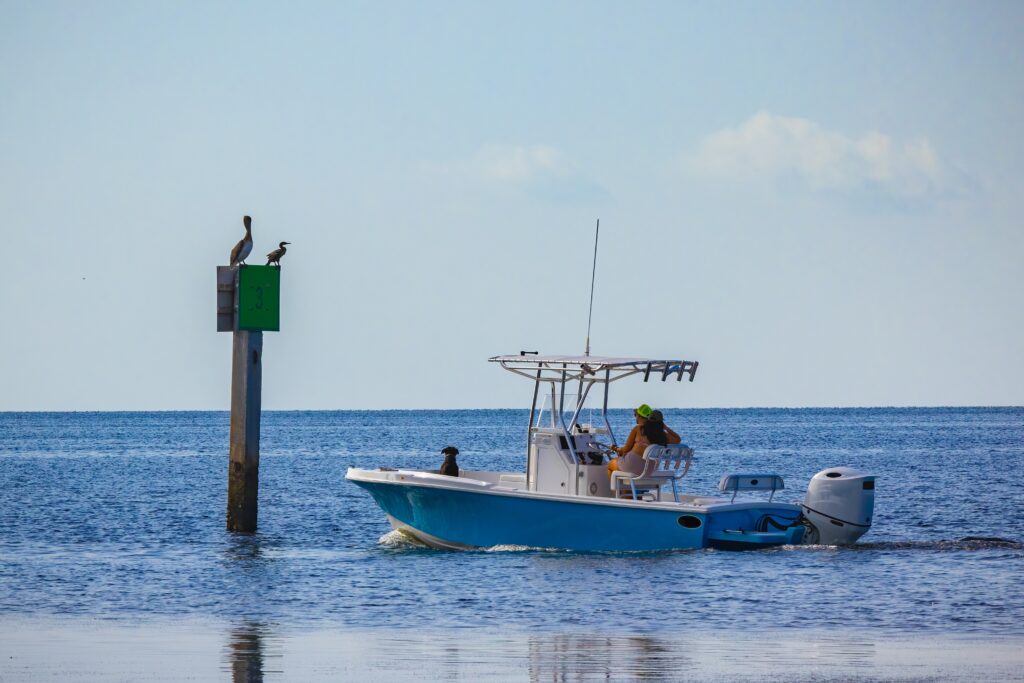
A vessel running into a channel marker may sound like a freak accident, but on Florida’s busy waterways, it happens more often than most people realize. These fixed and floating navigation aids exist to keep boats safe, yet they can become the center of catastrophic crashes when operators are inattentive, inexperienced, or unfamiliar with the waterway. When a vessel strikes a channel marker at speed—called an allision—the results can be sudden, violent, and life-altering for everyone on board.
Mase Seitz Briggs has represented seriously injured boating accident victims in Miami and throughout South Florida since 1997. Our maritime lawyers have over 100 years of combined legal experience, have won more than 100 jury trials, and have recovered millions for survivors and their families. If you or a loved one was hurt in a boating collision involving a channel marker, call us at (305) 377-3770 for a free consultation.
What Channel Markers Do
Channel markers are navigational aids maintained by the U.S. Coast Guard and placed throughout Florida’s waterways to guide vessels through safe passages and away from hazards. They include red nun buoys, green can buoys, preferred-channel marks, and fixed pilings driven into the seabed. Each communicates specific information about water depth, channel boundaries, and nearby dangers.
One fundamental rule is “red right returning”: when heading from open water inland or upstream, red markers should be kept on the starboard side. Operators unfamiliar with this rule, or simply not paying attention, dramatically increase the risk of a collision or allision. In busy South Florida waterways where markers are closely spaced, and tides shift the visual landscape, that risk is compounded.
Common Causes
Most channel marker allisions are preventable. Recurring causes include operator inattention or distraction, inexperience navigating unfamiliar waterways, excessive speed in restricted channels, alcohol or drug impairment, poor visibility from glare or fog, partially submerged markers that are hard to see in time, failure to consult updated charts, and attempting to overtake another vessel without adequate clearance.
According to the Florida Fish and Wildlife Conservation Commission’s 2024 Boating Accident Statistical Report, collision with a fixed object—which includes channel marker allisions—was the single leading accident type in Florida, accounting for 31% of all reported incidents.
Common Injuries
The high-force impact of a vessel striking a fixed object can cause severe injuries, particularly to those ejected into the water. Common injuries include:
- Traumatic brain injuries and concussions
- Spinal cord injuries and vertebral fractures
- Broken bones
- Deep lacerations from hull debris
- Internal injuries from blunt force trauma
- Drowning or near-drowning
- Soft tissue injuries to the neck, back, and shoulders
Some injuries are not immediately obvious. Anyone involved in a channel marker crash should be evaluated by a doctor as soon as possible, even if they feel fine at the scene.
Recent Florida Keys Channel Marker Allision
An allision earlier this year illustrates how quickly these accidents can turn deadly. According to the Miami Herald, on the afternoon of February 20, 2026, a boat struck a channel marker off Tavernier in the Upper Florida Keys, ejecting all six people on board into the water. Four were hospitalized. Boaters in the area helped pull passengers from the water before emergency responders arrived. Two people were airlifted to Jackson South Medical Center, two were treated at Mariners Hospital in Tavernier, and two declined treatment at the scene. The Monroe County Sheriff’s Office and the FWC are investigating.
The waters off Tavernier and throughout Monroe County are statistically among the most dangerous in Florida for boating incidents. The same FWC 2024 report found that 65% of operators involved in fatal accidents had no formal boating training, underscoring how consistently human error drives these outcomes.
What to Do After a Channel Marker Crash
The steps you take in the immediate aftermath matter:
- Check passengers for injuries and contact the U.S. Coast Guard or dial 911 if anyone is hurt.
- Stay at the scene and assist any passengers in the water.
- Document the scene with photos of the marker, your vessel, and any visible injuries.
- Collect names and contact information for witnesses.
- Preserve the vessel’s GPS records, navigation equipment, and electronic logs.
- Report the accident to the FWC.
- Contact a maritime lawyer before giving any recorded statement to an insurer or investigator.
Who May Be Liable
Liability depends on the specific facts. Potentially responsible parties include the vessel operator, the vessel owner, a charter or rental company, a marina or dock operator, or a government entity if a missing or damaged navigation marker contributed to the crash. Identifying every party whose negligence contributed to the collision is one of the most important steps in a boating allision claim.
Why Maritime Experience Matters
Boating cases are different from ordinary personal injury claims. They involve a distinct body of federal admiralty law that applies to accidents on navigable waters. Choosing a lawyer without a real maritime background can leave money on the table or derail a valid claim entirely.
Our approach includes independent investigation of the cause, obtaining and analyzing GPS records and navigation logs, identifying all liable parties, working with maritime and accident reconstruction experts, and pursuing the full range of compensation available under both federal and Florida law, including wrongful death damages where a family member was killed.
Why Other Attorneys Refer These Cases to Us
Maritime cases involve specialized law that most personal injury firms are not equipped to handle. Referring attorneys send us cases involving complex liability questions, multiple potentially responsible parties, charter and commercial vessel operations, and federal admiralty issues that require focused expertise. We work cooperatively with referring attorneys under arrangements consistent with the Florida Rules of Professional Conduct.
Talk to Us
If you or a loved one was injured in a channel marker collision or any other boating accident in South Florida, contact our Miami maritime lawyers at (305) 377-3770 for a free consultation. There is no fee unless we win.
Mase Seitz Briggs 2601 South Bayshore Drive, Suite 800 Miami, Florida 33133 (305) 377-3770